Bold graphics from the golden age of poster design
The art of the poster reached its first golden age in 1890s Paris, where advances in chromolithography enabled artists to create large-scale, multi-color prints for commercial advertising. Jules Chéret, known as the "father of the modern poster," produced...
 📷 Before
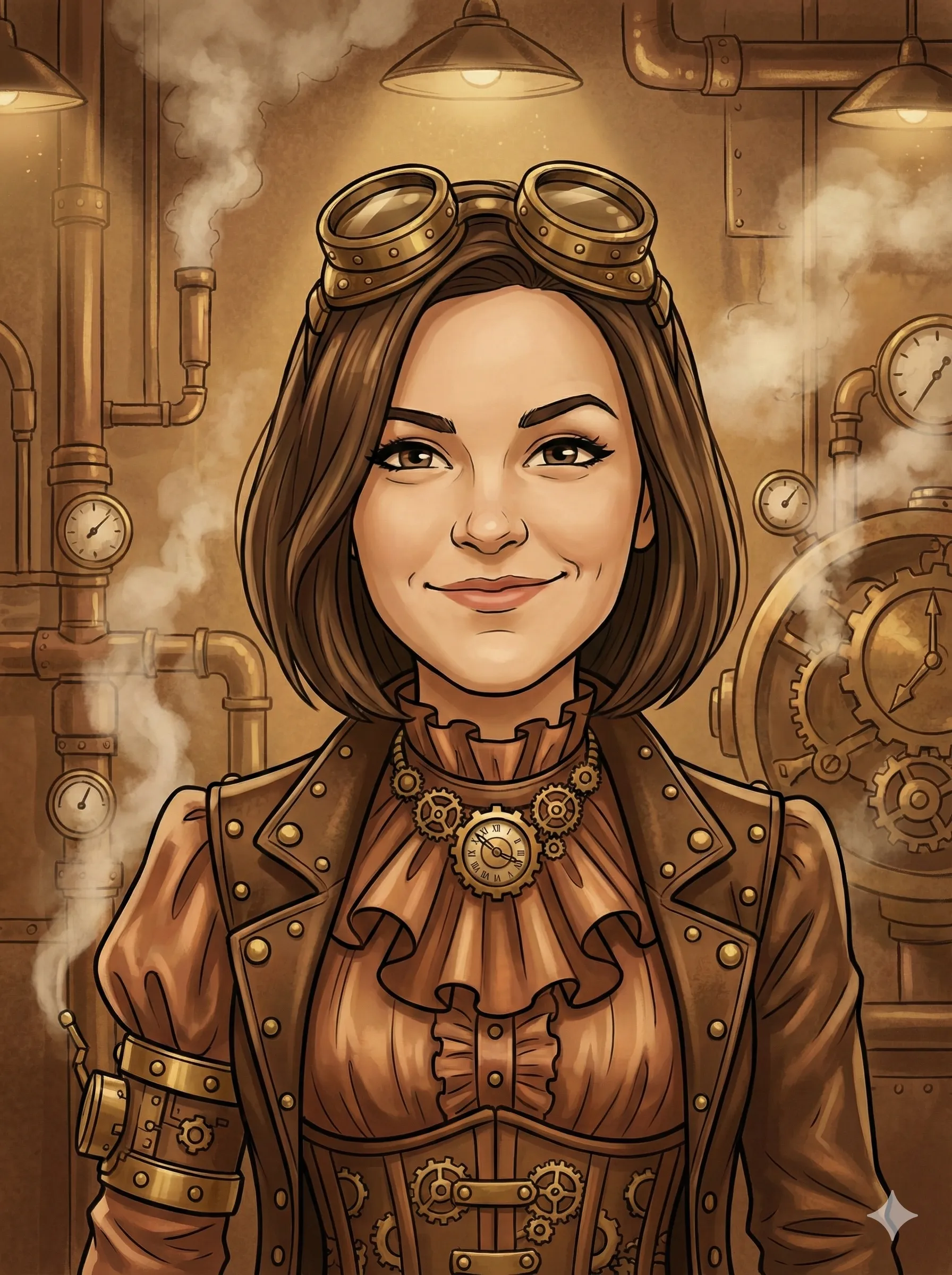
 📯 After










About Retro Poster
Origins, history, and what makes this art style unique
The retro poster aesthetic encompasses several distinct historical movements: the Art Nouveau posters of the 1890s–1910s with their organic curves and decorative borders; the bold Constructivist and Bauhaus posters of the 1920s–1930s featuring geometric abstraction and photomontage; the WPA (Works Progress Administration) posters of 1930s–1940s America with their simplified forms and civic messaging; and the psychedelic concert posters of the 1960s with their vibrating colors and Art Nouveau revival lettering. Common across these eras is an emphasis on immediate visual impact, limited color palettes achieved through overprinting, hand-drawn lettering integrated with imagery, and a graphic boldness demanded by the medium's function as public communication.
The poster's cultural significance extends far beyond advertising. Political posters have shaped revolutions — from the Soviet Constructivist works of Alexander Rodchenko and El Lissitzky to the Cuban revolutionary graphics of the OSPAAAL. Travel posters by artists like A.M. Cassandre (whose "Normandie" and "Nord Express" designs are masterpieces of Art Deco graphic design) romanticized modernity and movement. The medium's inherent democracy — designed for public walls, not private galleries — gives it a populist energy that continues to influence contemporary graphic design, screen printing, and digital illustration.
Key Elements
The core artistic techniques that define Retro Poster
Flat Color Separation and Overprinting
Mimics the chromolithographic and screen-printing process where each color is applied as a separate flat layer, with mid-tones created through halftone dots or overprinting rather than smooth gradients — a constraint that produces the bold, graphic clarity characteristic of vintage poster design.
Integrated Typography and Image
Follows the poster tradition established by Chéret and perfected by Cassandre, where hand-drawn or carefully chosen lettering is composed as an integral visual element of the design — not separate from the image but woven into the same graphic space with shared rhythms and proportions.
Simplified Form and Graphic Impact
Reduces photographic detail to bold, readable shapes optimized for distance viewing and immediate comprehension — the fundamental design principle of poster art, where the image must communicate instantly to passersby on a busy street.
How It Works
Transform your photo into retro poster art in 3 simple steps
Upload Your Photo
Choose any portrait photo from your device. Front-facing works best for stunning results.
Select Retro Poster
Our AI analyzes your photo and applies the retro poster artistic style with precise attention to detail.
Download & Share
Get your high-quality cartoon portrait in about half a minute. Download in full resolution or share directly.
Perfect For
Before & After
See the Retro Poster transformation in action
Retro Poster FAQ
Jules Chéret established the modern advertising poster in 1860s–1890s Paris through his mastery of chromolithography. Toulouse-Lautrec brought fine art sensibility to the medium with his Moulin Rouge posters. Alphonse Mucha defined Art Nouveau poster style. In the 20th century, A.M. Cassandre revolutionized poster design with Art Deco geometry, Lucian Bernhard pioneered the "Sachplakat" (object poster) approach in Germany, and the Soviet Constructivists created some of the most powerful political poster art in history.
Early posters used chromolithography, where each color required a separate stone, naturally limiting palettes to 3–6 colors. Screen printing (serigraphy), adopted widely in the mid-20th century, similarly uses separate screens for each color. Both processes produce flat, solid color areas with halftone dots for tonal variation and occasional misregistration (slight color misalignment) that has become a cherished aesthetic element of the retro poster style.
The poster was arguably the birthplace of modern graphic design as a discipline. Principles developed for poster art — visual hierarchy, the integration of type and image, communication through simplified form, and the use of limited color for maximum impact — became foundational to the field. The Bauhaus poster workshops directly informed mid-century graphic design education, and contemporary digital designers still draw on the compositional strategies and aesthetic vocabulary established by poster artists.
Try Retro Poster
Style Now!📯
Upload your photo and get your retro poster portrait in about half a minute.