Neon-drenched visions of a high-tech dystopian future
Cyberpunk as a visual aesthetic evolved from the literary movement that crystallized in the early 1980s with William Gibson's "Neuromancer" (1984), Bruce Sterling's editorial work, and the foundational influence of Philip K. Dick's earlier novels like "Do...
 📷 Before
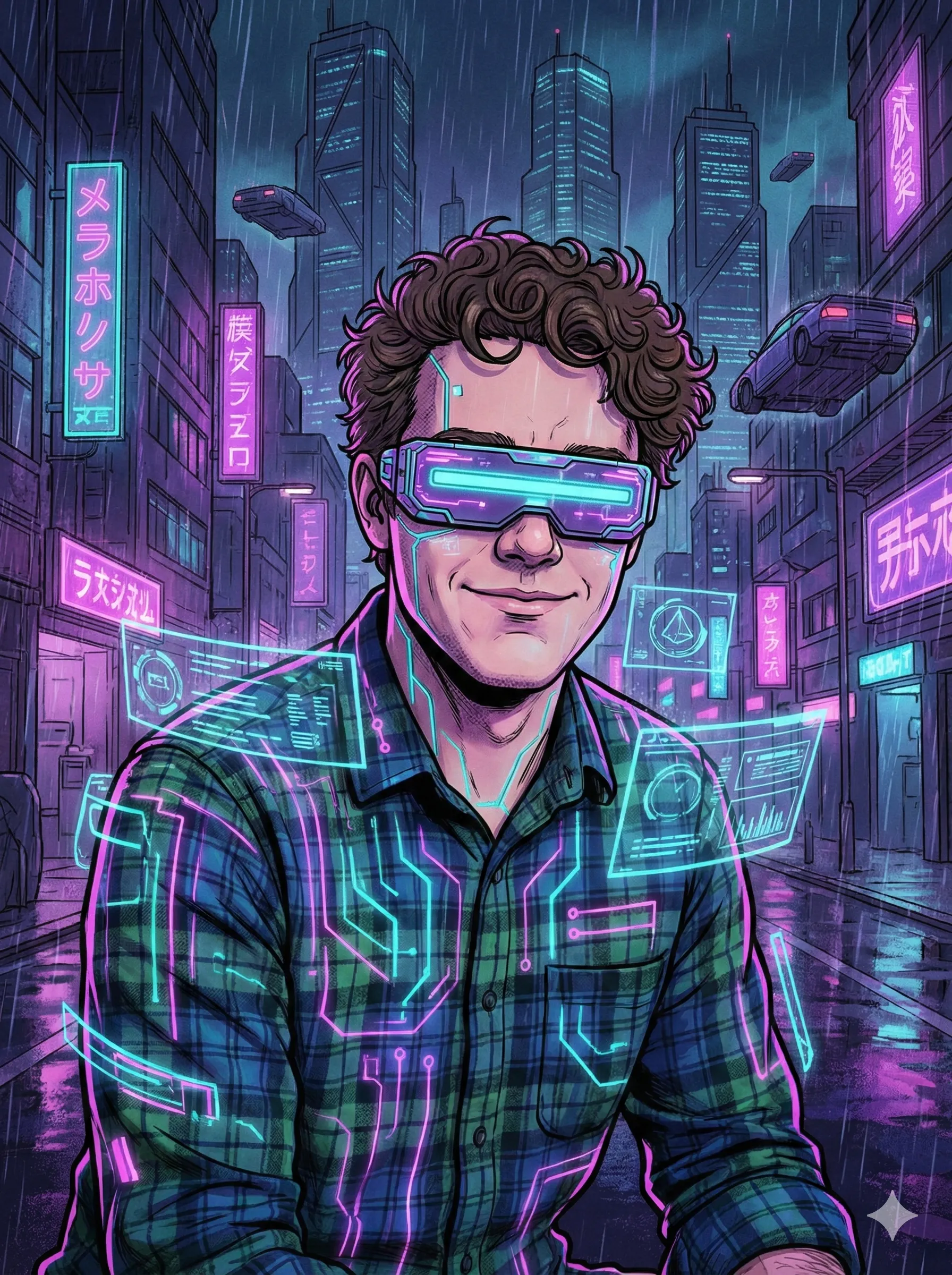 🤖 After








About Cyberpunk
Origins, history, and what makes this art style unique
The cyberpunk palette is dominated by high-contrast neon colors — electric cyan, hot magenta, violet, and acid green — set against deep blacks, charcoal greys, and the dark blue of perpetual night. Lighting is characteristically dramatic and artificial: holographic projections, LED strips, neon tube signage, and the glow of computer screens provide the primary illumination, casting colored light across faces and wet surfaces. Visual motifs include cybernetic augmentations, heads-up display overlays, circuitry patterns, holographic interfaces, and the layered density of Asian megacities. The aesthetic draws from real locations — Tokyo's Kabukichō, Hong Kong's (now-demolished) Kowloon Walled City, and Chongqing's layered urban landscape.
Cyberpunk's cultural impact extends far beyond science fiction fandom. Its visual language has been absorbed into mainstream design through blockbuster video games, fashion (techwear, gorpcore), music (synthwave, darksynth), and interface design. The genre's core thematic tension — "high tech, low life," as Sterling described it — resonates increasingly as real-world technology advances while economic inequality widens. Contemporary artists like Josan Gonzalez and Maciej Kuciara, along with the concept art teams behind major sci-fi film and streaming productions, continue to evolve the aesthetic for new technological realities.
Key Elements
The core artistic techniques that define Cyberpunk
Neon Rim Lighting and Color Split
Uses dramatic, multi-colored artificial lighting — typically cyan and magenta from opposing angles — to create the vivid color splits across faces and surfaces that define cyberpunk portraiture. This technique derives from the neon-saturated cinematography of landmark 1980s sci-fi cinema and its influence on subsequent visual design.
Cybernetic Augmentation Details
Incorporates visual elements of human-machine integration — circuit traces, neural interface ports, holographic eye overlays, and metallic implant textures — reflecting cyberpunk's central theme of technology's invasion of the human body, as theorized by Donna Haraway's "Cyborg Manifesto" and depicted across the genre's visual media.
Urban Density and Technological Layering
Renders backgrounds with the stacked, information-dense urban environments characteristic of cyberpunk — neon signage in multiple languages, holographic projections, exposed infrastructure, and the visual cacophony of a society where technology has saturated every surface of public space.
How It Works
Transform your photo into cyberpunk art in 3 simple steps
Upload Your Photo
Choose any portrait photo from your device. Front-facing works best for stunning results.
Select Cyberpunk
Our AI analyzes your photo and applies the cyberpunk artistic style with precise attention to detail.
Download & Share
Get your high-quality cartoon portrait in about half a minute. Download in full resolution or share directly.
Perfect For
Before & After
See the Cyberpunk transformation in action
Cyberpunk FAQ
A landmark 1982 neo-noir science fiction film established the foundational visual language: neon-lit rain, Asian-influenced megacities, corporate ziggurats, and android ambiguity. A groundbreaking 1988 Japanese animated film added kinetic energy and motorcycle culture. A celebrated mid-1990s anime feature explored digital consciousness with stunning visual sophistication. These works, alongside Syd Mead's concept art and Moebius's comic illustrations, constitute the core visual canon of cyberpunk.
In the 1980s, Japan's rapid economic rise and Tokyo's neon-saturated streetscapes embodied the "future shock" that cyberpunk explored. Hong Kong's Kowloon Walled City — an ungoverned, densely layered urban structure — became a literal architectural metaphor for cyberpunk's themes. William Gibson famously described the genre's vision as emerging from walking through Tokyo's Shibuya district. This Asian-futurist element reflects both genuine admiration and, in earlier works, Orientalist anxieties about shifting global power.
Coined by Bruce Sterling, "high tech, low life" encapsulates cyberpunk's defining tension: advanced technology coexisting with social decay, poverty, and corporate oppression. Visually, this manifests as gleaming holographic advertisements above trash-strewn alleyways, cutting-edge cybernetic implants on impoverished street hustlers, and gleaming corporate towers overlooking sprawling slums. This juxtaposition gives cyberpunk its critical edge and distinguishes it from utopian science fiction.
Try Cyberpunk
Style Now!🤖
Upload your photo and get your cyberpunk portrait in about half a minute.